Writer's Write
Gifts That Keep On Giving

Writers, welcome to December! December 25th is sometimes said to be based on a pagan holiday, but the date is most often celebrated as the birth of Jesus, who is the Greatest Gift to anyone who chooses to accept that Gift. John 3:16 states, “For God so loved the world that he gave his only begotten Son, that whosoever believeth in Him shall not perish, but shall have everlasting life.”
I will not tell anyone how or what to celebrate on December 25th, however, but during this holiday season, I like to share the gift of laughter whenever possible. If I have to share that gift by making fun of some messy writing, so be it. I will share the gift of writing that doesn’t actually mean what it says.
I love words, and I love them so much that I created an entire book about words. The book, of course, is available on Amazon.com.
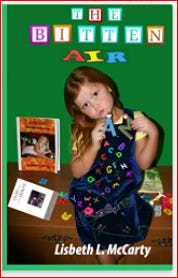
Now, that my shameless self-promotion is complete, I have “word gifts” for all my newsletter readers. I get a kick out of sentences that are slightly amiss. Usually, the true meaning is obvious, but if you read the sentence literally, you end up at a different place.
These are all sentences that I have read online, in newspapers, on signs, and in various other places. As long as there are writers, these goofs will always exist, so these are the gifts that keep on giving.
Please keep in mind that my intention is not in any way whatsoever to “grammar shame” the writers of these miscommunications (although I cannot be held personally responsible if a tiny bit of “grammar shaming” is the result of what has been written). I recognize that at least, the writers are writing. They are making an effort. They are working at their craft. I commend all writing efforts (just be sure to re-read what you write to avoid any flaky meaning).
Besides, any of us who write a lot have probably made the same mistakes before, and we are lucky if an editor catches the accident before whatever we have written is published. No, I am not “grammar shaming” the words in the sentences below, but yes, I am laughing at them. And I hope you will, too.
Lynn Truss wrote an entire book about the importance of punctuation in the book titled Eats, Shoots & Leaves. The reference was to a panda, and the complete sentence should have read that a panda “eats shoots and leaves.” What does a panda eat? The panda eats bamboo shoots and bamboo leaves. The comma in the book title was purposely misplaced, giving an entirely different meaning than intended. This mishap might have even arisen from a student’s essay on pandas.
Who would ever want to be around a panda who would eat the meal, then shoot, then leave? Would the EMTS even believe your story that a panda shot you? Where in the world would a panda even get a gun, or an arrow, or a slingshot, or whatever weapon he must be using to shoot? I promise there is no actual physical violence involved in this newsletter because a panda doesn’t really use guns or arrows or slingshots or any other kind of weapon that shoots. Thus, this doesn’t count as violence. I’m the one writing this, so I’m also the one who can make up the rules, yes?
The examples below are all about misplacements of words which skew the meaning of what is being said. Years ago, in my job as an appellate attorney/editor, I was editing a brief which was written by an attorney. This was an excellent attorney and writer who had even won a prestigious award for his appellate advocacy.
All appellate advocacy in Oklahoma involves writing a brief on behalf of your client. Each brief is required to present a “Statement of the Case” and a “Statement of the Facts.” The first requirement is a recitation of the legal proceedings that took place, while the second requirement is a recitation of what actually happened that resulted in a conviction(s). I’ve used snippets of a random public record case below to show you what those requirements usually look like.
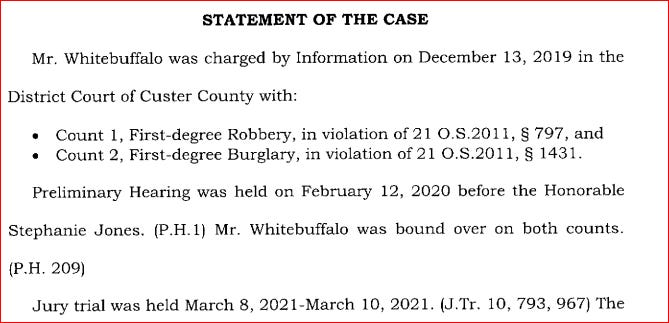
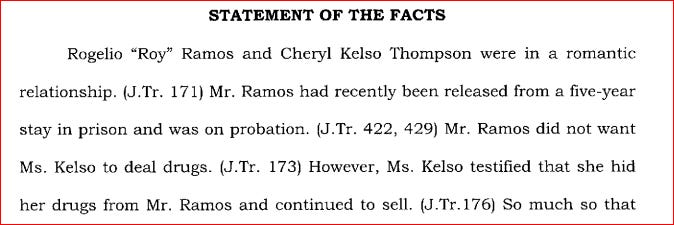
The funny wording from the case that I’m sharing with you below is from a different case. The defendant John Doe (obviously not his real name) in this case had been convicted of kidnaping after he had dragged his former girlfriend Jane Doe (also not her real name) into his car, then drove her to the lake. At the lake, Jane refused to comply with John’s demand that she get back together with him, which obviously was a ridiculous plan on John’s part. John had been so sure of his plan, however, that he had kept the engine running in his car.
After Jane’s sane refusal, John apparently thought that using a weapon to threaten Jane and force her to take him back would be a workable solution to the problem at hand. At this point, the plan had gone from ridiculous to the highest possible level of absurdity. I will wager a guess that John does not qualify for any high IQ societies.
Even though no one was actually physically hurt in this situation, I cannot vouch for Jane’s mental state. I cannot begin to imagine how difficult it would be to have someone trying to force his will on you, and even pulling out a club to try to do so. John’s action with the weapon also caused assault to be added to the charges against him, but there was no battery because he never touched Jane.
In trying to explain the situation, the attorney choose some words that led to the wrong meaning. The sentence below is verbatim, except for the name changes. The attorney wrote in the Statement of Facts in the brief:
After Jane refused to agree to date John again, John pulled out a club and killed the ignition.
Of course, John didn’t really kill the ignition with a club. I don’t even know if that would be possible, although maybe if you struck the ignition enough times some permanent damage would occur. Who knows?
In fact, when John finally realized his attempts to rekindle his relationship with Jane were in vain, he drove the poor girl back to her car. Obviously, the ignition was not killed because John was able to drive the car after pulling out the club. Even accepting the word “killed” as a slang term doesn’t work with the attorney’s sentence. What the attorney meant to write was about two different actions that John had taken. John had pulled out a club. John had turned off the ignition. There’s a big difference in what the attorney wrote and what the attorney meant.
There was a recent story in a newspaper that caused me to laugh, although I’ve again changed the name of the defendant and crime to protect the copy editor who somehow missed the bad grammar and the reporter (or editor) who wrote the improper sentence. Jane Doe had been charged as an Accessory After the Fact to First-Degree Burglary, and there was a photo of Jane Doe at her trial. The cutline under the photo read:
Pictured is the defendant Jane Doe, whose attorneys tried to determine if she knew about the burglary on the day of the trial.
This sentence lends itself to many meanings, none of which the writer was most likely trying to say. Were the attorneys only trying to make this determination for the first time on the day of the trial? If so, that’s sloppy, unprepared, and incompetent legal work!
Did Jane Doe herself only know about the burglary for the first time on the day of the trial? If true, she must not have had an arraignment, the procedure where the accused is officially informed of the charges against him or her, after which the accused enters a plea of guilty or not guilty. Jane Doe, like anyone else, has a due process and equal opportunity right to know prior to trial what the exact charges against her are.
These strange words appeared within a medical report, which stated:
The patient is recently married; otherwise, he is normal and healthy.”
Whoever wrote that must have a low opinion of marriage. I guess it’s good to know, however, that a marriage won’t keep you from being normal and healthy.
The next words arrive courtesy of the OU DAILY (where I honed my newspaper skills while in college). The sentence dealt with OU football (Boomer! Sooner!), and stated:
Jadon Haselwood gathered with his offensive teammates Friday night.
While this may technically be correct in stating that Haselwood was getting together with teammates who played on offense, the sentence can also be read to mean that Haselwood was meeting with teammates who are obnoxious, regardless of whether those players are on offense or defense. Even the use of the word “gathered” can point to a dubious meaning. What were Jadon and his teammates gathering? Mushrooms? Cars? Instagram followers? Data about what Lincoln Riley might be planning to do?
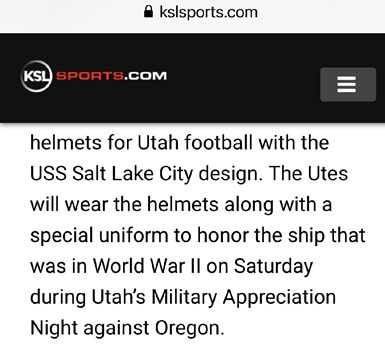
Speaking of football, on November 21, 2021, I was watching an Oregon v. Utah football game. I noticed the unusual football helmets that the Utah players were wearing, but I couldn’t figure out what the design was or what the design’s purpose was. I searched the internet to find out about the Utah helmets. I discovered that an artist had individually painted each helmet to honor a World War II ship. The odd sentence read:
The Utes will wear the helmets along with a special uniform to honor the ship that was in World War II on Saturday during Utah’s Military Appreciation Night against Oregon.
How was that ship still involved in World War II on that Saturday in 2021? Did someone not tell the writer that World War II had ended in 1945?
Finally, when I think of Jeopardy!, I feel certain that the clue writers are highly intelligent people (as opposed to John Doe with the club). That doesn’t mean that those writers sometimes don’t miss the mark. The category was something about well-known phrases (or whatever it was). The clue read, “If a party invitation includes this 4-word phrase, it means to wear whatever you have on at the moment.”
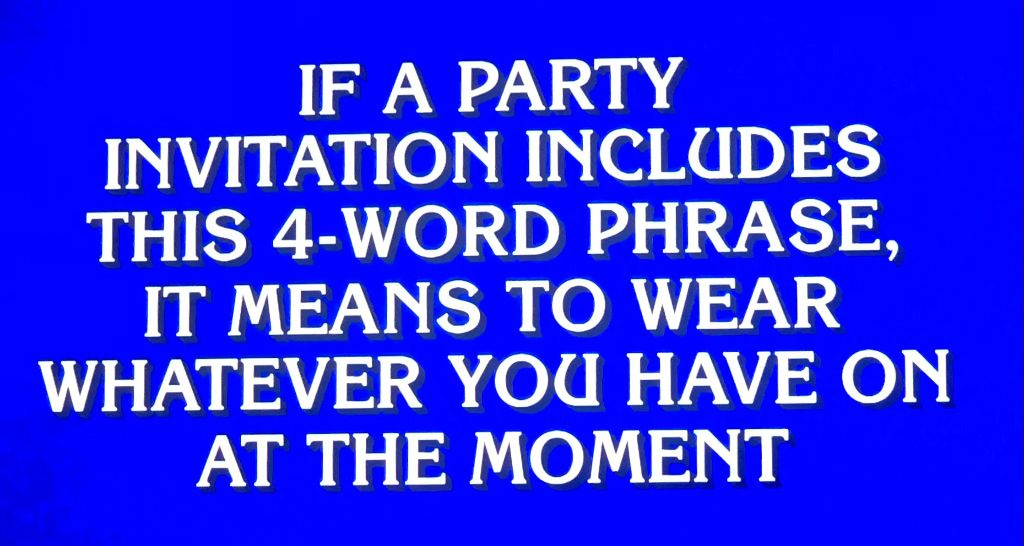
The accepted answer was “Come as you are,” but that is not truly what the phrase means. For example, what if you were in the bathtub when your valet brought you the invitation? I don’t think the host would want you to arrive at the party in your birthday suit. What the phrase actually means is that you should dress casually, as there is no dress code for the event. The lack of a dress code, however, does not mean that you attend sans clothing.
I hope that you enjoyed your gifts of misleading writing. I also hope that all of you find humor, love, and joy this Holiday Season! Happy Holidays, Merry Christmas, Happy Hannkkah (or Chanuka), Happy Kwanzaa, Happy Boxing Day, Happy New Year’s Eve, Happy Ōmisoka, and Happy Festivus! If I missed whatever holiday you may be celebrating, please feel free to mentally throw it into the mix.
I also ope you are on the “nice” list for Santa’s List Day on December 4, 2021! Personally, I’m looking forward to the celebrating the National Chocolate-Covered Anything Day on December 16, 2021.