Writers Write
Writing is an Equal Opportunity Profession

Writing is an equal opportunity path for anyone who wants to be an author. You have to have a license to practice medicine, law, nursing, physical therapy, cosmetology, to be an electrician or plumber, or to drive a car. There are other professions requiring a license that are too numerous to mention. Some professions also require you to have a degree. You don’t have to have a degree or any license whatsoever to write.
Because I was always interested in writing, I obtained a Bachelor’s degree in Professional Writing through the Journalism College at OU before attending law school. Here’s what I remember from the Professional Writing degree program:
1. When writing dialogue, using “said” is always sufficient, and no other verb is necessary. The writing professor often shouted, screamed, or yelled, “Use `said,’ nothing more, nothing less.”
2. Stay away from big words when a little word will do. Write the word “use” instead of “utilize.” Feel free to utilize this information.
3. There is only one way to describe someone who is sleeping, and that is to write that the person looks innocent.
Sidebar: In the tv show Curb Your Enthusiasm episode titled “Artificial Fruit” (written by Carole Leifer, Larry David, and Jeff Schafer), Larry’s attorney accuses him of blithely eating an apple during an important discussion. Larry responds, “There’s no other way to eat an apple but blithely.” The attorney responds that his father ate “angry apples,” and that “there are a lot of emotional colors available when eating an apple.”
The takeaway from what I learned in college is that if we, as writers, want to break the “rules,” we are free to do so. We cannot be sent to writer’s jail because there is no such thing. We can utilize a rule-breaking strategy to describe someone sleeping as evil, dangerous even, and we can close out dialogue quotes by writing that the person whispered, exclaimed, observed, noted, slurred, deigned, etc. That previous sentence is tongue in cheek, but gets a high score for triple rule breaking (even if I am conveniently awarding myself the score).
You can start writing at any time in your life, whether that be from the first time you held a pen in your hand as a toddler to starting at the elderly age of Methuselah. On the young side, Mary Shelley published Frankenstein when she was 21. Bret Easton Ellis was also age 21 when he wrote Less Than Zero. S.E. Hinton was only 15 when she started writing The Outsiders, and the book was published when she was 18.
On the later in life side, Julia Child is said to have published her first cookbook at 49 years old. Stan Lee (along with artist and writer Jack Kirby) published The Fantastic Four at age 44. Toni Morrison, although she wrote her first novel at age 40, was fairly unknown until she won the Nobel Prize for literature at age 62. The Big Sleep by Raymond Chandler was first published in 1939 when he was age 51. Pulitzer Prize winner Frank McCourt was 66 when his novel Angela’s Ashes was first published.
God once commanded Moses to write a song, and Deuteronomy 31:22 states, “So Moses wrote this song the same day and taught it to the people of Israel.” Moses was 120 years old at the time.
Not all of the older ages mentioned above are ancient. The older I get, the younger most of these ages sound. After all, I dated George Washington before he ditched me for Martha. I still remember the first time someone called me ma’am, the first time I saw a doctor who was obviously younger than I am, and when college football players started to look like middle-schoolers. Perhaps I should adapt a line from Sunset Boulevard, written by Billy Wilder and Charles Brackett, and declare, “I’m still young. It’s the rest of them that look younger!”
We can write slowly or quickly. Margaret Mitchell spent ten years writing Gone with the Wind. Charles Dickens wrote A Christmas Carol in six weeks. One person may write at a snail’s pace of only a few words a day, while someone else might zip off a novel in a few weeks. The bottom line is that each person is still writing.
Someone else’s success as an author does not prohibit us from finding our own author success. Just because John or Jane Doe writes a best-seller that tops one of the numerous book lists from Anywhere USA, that does not make our books any less of a great read, capable of also being listed as a best seller somewhere.
Even the fact that readers are crucial is part of the equal opportunity for writers. Some readers like sci-fi. Other people may like werewolf stories or inspirational stories or flash fiction. There’s so many genres, and just because one reader doesn’t like your book doesn’t mean someone else won’t love it. I might write a book about a talking chair that cruelly dominates a family of meek giants until one giant has finally had enough and takes charge by sitting in, and thereby breaking, the chair. That may sound ridiculous, but there’s probably an audience for that somewhere in this universe. I could title the book Chairman Ciao or Not Sitting Well or Take a Seat.
Further proof of the equality of being a writer is that when you submit your work to a contest or as a submission to be considered for publication, the readers (most of the time) have no idea what you look like. The readers don’t care if you are height and weight proportionate or thin or thick. They don’t care if you are a stunning beauty or an average Joe or a plain Jane. They don’t care if you grew up on champagne and caviar or if you grew up eating beans and cornbread one night, and cornbread and beans the next night.
They don’t care if you are an extrovert or an introvert. Unless you specifically reveal yourself in non-fiction writing, readers don’t know you. Cue the YouTube video of Ray Charles singing “You Don’t Know Me,” written by the prolific songwriter Cindy Walker. Even if the song doesn’t relate exactly to what I’m talking about, I like it, so I’m sharing it. See? You can do whatever you want when you are the one writing. More about writing follows the video.
Readers do not care if you jotted down your submission in a matter of minutes or if you overthought each word you wrote. Readers care about if they like what they are reading, regardless of the writer’s personal circumstances. They do not judge you for your looks, social status, writing habits, age, or personality. What wonderful equal opportunities we have as writers!
We can write whatever we want, whenever we want, however we want. This is not information for sloppy writing, though. We really should know the rules of grammar and basic writing before we break those rules.
The cult classic movie Dirty Dancing, written by Eleanor Bergstein and released in 1987, gives us the memorable line (spoken by Patrick Swayze as dancer Johnny Castle), “Nobody puts Baby in the corner.”
This line is inspirational because it alludes to not letting anyone else prevent you from letting your light shine or pursuing your dreams. If you want your light to shine and your dream to come true as a writer, there’s every opportunity in the world for you to do so, as well as equal opportunity for rejection. Let neither writing success nor rejection of your writing put you in a corner. Just keep writing.
In the song The Circle of Life, written by Tim Rice and Elton John, part of the lyrics state:
There's far too much to take in here
More to find than can ever be found
But the sun rolling high through the sapphire sky
Keeps great and small on the endless round
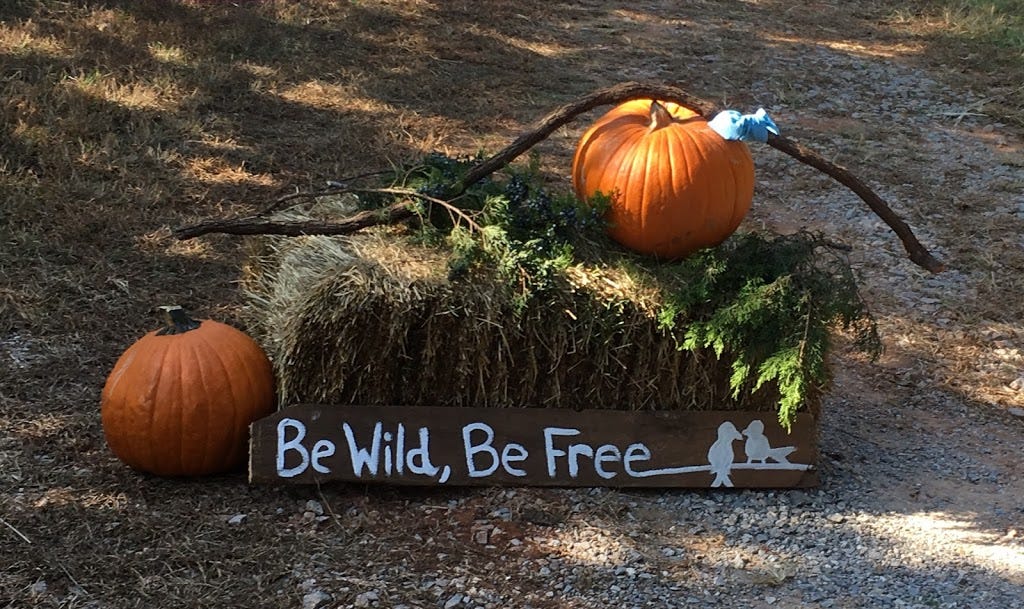
In writing, those great and small among us are all equally on the endless round, but we can be motivated by the beauty of the sapphire sky. Think, write, take risks, be wild, be free, use all the emotional colors available, submit, get rejected, submit again elsewhere, possibly get published, ad nauseum. That’s a writer’s circle of life.